
The pea gravel price per yard can range from $30 to $80, with the average hovering around $50 per cubic yard. This price can fluctuate based on location, quality, and whether you opt for delivery or pick-up.
Pea gravel is a popular choice for many landscaping and construction projects due to its smooth texture, rounded shape, and attractive appearance. It’s versatile, used for walkways, patios, drainage, and even as a decorative element. But before you start planning your next outdoor project, it’s crucial to get a handle on the costs involved. This comprehensive guide will delve into the factors influencing the cost of pea gravel for landscaping, explore different purchasing options, and help you estimate your project’s budget accurately.
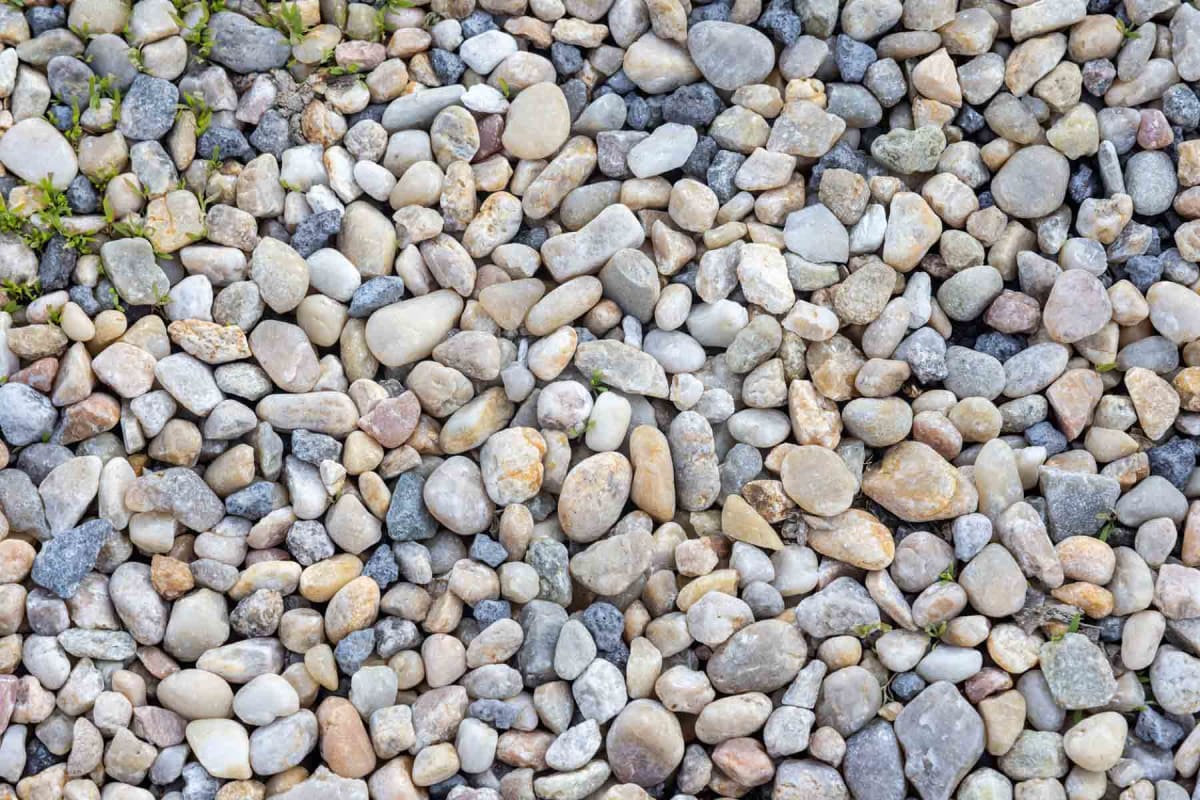
Image Source: res.cloudinary.com
Deciphering Pea Gravel Pricing: Key Influencing Factors
Several elements contribute to the final price you’ll pay for a yard of pea gravel. Understanding these factors will empower you to make informed decisions and find the best value for your needs.
Gravel Quality and Type
Not all pea gravel is created equal. The quality can vary significantly, impacting its price.
- Color: While often associated with a uniform tan or beige, pea gravel can come in various shades, including grey, brown, and even red. More unique or consistent colors might command a higher price.
- Size Consistency: High-quality pea gravel will have a more uniform size distribution. Gravel that is too large or too small, or contains a lot of dust and fines, might be cheaper but less desirable for certain applications.
- Smoothness and Roundness: The characteristic smooth, rounded nature of pea gravel is a result of its natural formation or tumbling process. Gravel that is exceptionally smooth and well-rounded is often preferred for walkways and patios, potentially increasing its cost.
- Purity: Some gravel may contain small amounts of other stone types or impurities. Purer pea gravel, with fewer foreign materials, will typically be priced higher.
Source and Supplier
Where you buy your pea gravel can also affect the price.
- Local Quarries vs. Big Box Stores: Local quarries often offer competitive bulk pea gravel prices directly. Big box home improvement stores might offer smaller quantities in bags, which can be more convenient for small projects but less cost-effective for larger ones. They often have a markup compared to direct suppliers.
- Wholesalers: For very large projects, buying directly from a wholesaler can yield significant savings.
- Online Retailers: While convenient, online prices might include shipping costs, which can add up.
Quantity Purchased: Bulk vs. Bags
The quantity you buy is a major determinant of the pea gravel price per yard.
- Bulk Delivery: Purchasing pea gravel by the cubic yard in bulk is generally the most economical option for larger projects. You’ll typically need a minimum order, and delivery fees apply. This is where you’ll find the best bulk pea gravel prices.
- Bagged Gravel: Pea gravel is often sold in bags, typically weighing 40-50 pounds. Each bag usually covers a small area (e.g., 0.5 cubic feet). While convenient for small garden paths or decorative accents, buying many bags can quickly become more expensive than a bulk delivery, especially when considering the cost of pea gravel for landscaping on a larger scale. Many people wonder if pea gravel bags vs bulk is a better deal. For anything more than a very small area, bulk is almost always more cost-effective.
Let’s look at a typical comparison:
| Quantity | Typical Price Range (per unit) | Cost-Effectiveness |
|---|---|---|
| 50 lb Bag | $4 – $8 | Low (for large jobs) |
| 0.5 cu ft Bag | $4 – $8 | Low (for large jobs) |
| 1 Cubic Yard | $30 – $80 | High (for bulk) |
Delivery Fees
If you’re not picking up the gravel yourself, you’ll need to factor in delivery costs.
- Distance: The further you are from the supplier, the higher the delivery fee.
- Delivery Method: Some suppliers use dump trucks, while others might use smaller vehicles or even offer flat-rate delivery within a certain radius.
- Minimum Order: Many suppliers have a minimum order quantity for delivery.
- Unloading Location: Some companies might charge extra if the delivery requires navigating difficult terrain or a long driveway.
Location
Geographical location plays a significant role in the cost of pea gravel for landscaping.
- Regional Availability: In areas where gravel is abundant, prices might be lower. In regions where it needs to be transported long distances, costs will naturally be higher.
- Local Demand: High demand in a particular area can also drive up prices.
Estimating Your Pea Gravel Needs: Using a Pea Gravel Calculator
Accurately estimating how much pea gravel you need is crucial to avoid overspending or running out mid-project. This is where a pea gravel calculator becomes invaluable.
How to Use a Pea Gravel Calculator
A pea gravel calculator typically works by asking for the dimensions of the area you want to cover and your desired depth of gravel.
-
Measure Your Area:
- Length: Measure the longest side of your project area in feet.
- Width: Measure the widest side of your project area in feet.
- Depth: Decide on the desired depth of the pea gravel. Common depths range from 2 inches to 4 inches. For pathways and patios, 3-4 inches is usually recommended for stability and coverage. For decorative ground cover, 2 inches might suffice.
-
Input Dimensions: Enter your length, width, and desired depth into the calculator.
-
Calculate Cubic Yards: The calculator will then convert your measurements into cubic yards.
Example:
Let’s say you want to cover a patio area that is 10 feet long and 8 feet wide, with a desired gravel depth of 3 inches.
- Length = 10 feet
- Width = 8 feet
- Depth = 3 inches = 0.25 feet (since 3 inches is 3/12 of a foot)
Calculation:
Volume in cubic feet = Length × Width × Depth
Volume = 10 ft × 8 ft × 0.25 ft = 20 cubic feet
To convert cubic feet to cubic yards, divide by 27 (since 1 cubic yard = 27 cubic feet):
Volume in cubic yards = 20 cubic feet / 27 cubic feet/yard ≈ 0.74 cubic yards
Most suppliers sell in whole or half cubic yards. So, for this project, you would likely order 1 cubic yard to be safe.
Factors to Consider Beyond Basic Calculation
- Compaction: Pea gravel will settle and compact over time, especially in high-traffic areas. It’s often advisable to order slightly more than your calculation, perhaps an extra 5-10%, to account for this.
- Sloping: If your area has a significant slope, you might need a slightly deeper layer of gravel to maintain an even surface.
- Weed Barrier: If you’re using a weed barrier fabric underneath, this won’t affect the volume of gravel needed but is an important cost to consider separately.
Pricing Breakdown for Common Pea Gravel Applications
The cost of pea gravel for landscaping varies depending on the intended use. Here’s a look at pricing for popular applications:
Backyard Pea Gravel Cost
Creating a backyard oasis with pea gravel is a popular choice. Whether for a play area, a pet run, or a decorative ground cover, pricing considerations are similar to general landscaping.
- Play Areas/Pet Runs: For these areas, durability and safety are key. A depth of 3-4 inches is recommended for good coverage and cushioning.
- Decorative Ground Cover: For flower beds or around trees, a depth of 1-2 inches might suffice.
Example Backyard Project:
Let’s imagine a backyard area of 200 square feet that you want to cover with 3 inches of pea gravel.
- Area = 200 sq ft
- Depth = 3 inches = 0.25 ft
Volume = 200 sq ft × 0.25 ft = 50 cubic feet
Cubic Yards = 50 cubic feet / 27 cubic feet/yard ≈ 1.85 cubic yards
You would likely order 2 cubic yards. If the average price is $50 per cubic yard, the gravel cost would be approximately $100. Add delivery fees, which could range from $50 to $150 depending on your location and the supplier.
Driveway Pea Gravel Cost
Using pea gravel for driveways is an option, particularly for less-trafficked residential driveways or as a decorative top layer. However, it’s important to note that pea gravel alone is generally not recommended for primary driveway surfaces due to its tendency to shift and rut. It’s often used as a decorative top layer over a compacted base of larger aggregate.
- Depth: For driveway use, a deeper layer is usually required, often 4-6 inches, especially if it’s part of the base material.
- Compaction: Driveways experience more significant weight and traffic, leading to greater compaction.
- Stability: Consider using geo-textile fabrics or containment grids beneath the gravel to prevent migration and rutting.
Example Driveway Project:
A driveway section that is 50 feet long and 10 feet wide, needing a 4-inch layer of pea gravel.
- Length = 50 ft
- Width = 10 ft
- Depth = 4 inches = 0.33 ft
Volume = 50 ft × 10 ft × 0.33 ft = 165 cubic feet
Cubic Yards = 165 cubic feet / 27 cubic feet/yard ≈ 6.1 cubic yards
You would likely order 6.5 or 7 cubic yards. At $50 per cubic yard, this would cost around $300-$350 for the gravel, plus substantial delivery fees, which can be higher for larger quantities.
Decorative Gravel Price
When used purely for aesthetics, such as in flower beds, borders, or around water features, the decorative gravel price is often similar to standard pea gravel, but specific colors or polished finishes might command a premium.
- Coverage: Typically, a shallower depth (1-2 inches) is used for decorative purposes.
- Aesthetics: The emphasis is on visual appeal, so the consistency and color of the gravel are paramount.
Example Decorative Border:
A garden border that is 30 feet long and 1 foot wide, requiring a 2-inch layer of pea gravel.
- Length = 30 ft
- Width = 1 ft
- Depth = 2 inches = 0.17 ft
Volume = 30 ft × 1 ft × 0.17 ft = 5.1 cubic feet
Cubic Yards = 5.1 cubic feet / 27 cubic feet/yard ≈ 0.19 cubic yards
For such a small amount, purchasing a few bags would be more practical than a bulk delivery, costing roughly $12-$24.
Comparing Pea Gravel Bags vs. Bulk Purchases
The decision between buying pea gravel bags vs bulk is critical for budget management.
When Bags Make Sense:
- Small Projects: Decorative accents, filling a small planter box, a very short pathway (less than 20 feet long and 2 feet wide), or top-dressing a small garden bed.
- No Delivery Access: If your project site is inaccessible to delivery trucks, bags might be your only option, although you’ll need to transport them yourself.
- Convenience: For very small, occasional needs, the ease of picking up a few bags from a local store can outweigh the cost savings of bulk.
Pros of Bags:
* Easy to transport for small quantities.
* No minimum order required.
* Can buy precisely what you need for tiny jobs.
Cons of Bags:
* Significantly more expensive per cubic yard.
* Labor-intensive for larger projects.
* More plastic waste.
When Bulk is the Clear Winner:
- Larger Projects: Driveways, patios, large walkways, extensive landscaping beds, or any project requiring more than 0.5 cubic yards of gravel.
- Cost Savings: The pea gravel price per yard is substantially lower when purchased in bulk.
- Efficiency: Bulk delivery saves significant time and labor compared to moving dozens of heavy bags.
Pros of Bulk:
* Lower cost per cubic yard.
* More efficient for larger quantities.
* Less packaging waste.
Cons of Bulk:
* Requires a minimum order quantity.
* Delivery fees apply.
* Requires a suitable unloading area for delivery trucks.
Additional Costs to Consider
Beyond the base pea gravel price per yard, several other expenses can impact your overall budget.
Weed Barrier Fabric
- Purpose: This permeable fabric prevents weed growth while allowing water and air to pass through to the soil.
- Cost: Typically ranges from $0.10 to $0.50 per square foot, depending on the quality and brand. For a 200 sq ft area, this could add $20 to $100.
Edging and Containment
- Purpose: To keep the gravel contained within your designated area and prevent it from migrating onto lawns or pathways.
- Types: Options include plastic edging, metal edging, bricks, stones, or specialized landscape timbers.
- Cost: Varies widely, from $1 to $10+ per linear foot. For 100 linear feet of edging, expect to spend $100 to $1000+.
Site Preparation
- Grading and Excavation: If you’re creating a new patio or driveway, you might need to excavate existing material and grade the area for proper drainage. This may require renting equipment or hiring labor, adding significant costs.
- Base Material: For driveways and patios, a compacted base of crushed stone (like #57 stone) is often necessary beneath the pea gravel for stability. This adds to the material cost and labor.
Tools and Labor
- Tools: You might need shovels, rakes, wheelbarrows, and tampers. These can be rented or purchased.
- Labor: If you’re not doing the work yourself, hiring landscapers or laborers will add to the cost. Labor rates can vary from $25 to $75+ per hour per person.
Finding the Best Pea Gravel Prices
To ensure you get the best deal, shop around and compare prices from different suppliers.
Tips for Sourcing Pea Gravel:
- Get Multiple Quotes: Contact local quarries, landscape supply yards, and even some big box stores to compare their pea gravel price per yard and delivery charges.
- Ask About Quality: Don’t just ask for the price; inquire about the size consistency, color, and any potential impurities in their pea gravel.
- Inquire About Delivery Minimums: Understand any minimum order requirements for delivery and the associated fees.
- Consider Off-Season Purchases: Sometimes, buying materials during the off-season (late fall or winter) can lead to better pricing, though availability might be limited.
- Check Online Reviews: See what other customers say about the quality of the gravel and the reliability of the delivery service.
- Negotiate for Large Orders: If you’re ordering a significant quantity (e.g., 10+ cubic yards), don’t hesitate to ask if there’s any room for negotiation on the price or delivery fee.
Frequently Asked Questions (FAQ)
Q1: What is a cubic yard of pea gravel?
A cubic yard of pea gravel is a measurement of volume. It’s equivalent to a cube that is 3 feet long, 3 feet wide, and 3 feet high. It typically weighs between 2,000 and 2,500 pounds, but this can vary slightly depending on moisture content.
Q2: Can I use pea gravel for a patio?
Yes, pea gravel can be used for patios, especially for a more natural, informal look. However, for optimal stability and comfort, it’s recommended to install it over a compacted base of crushed stone and to ensure a depth of at least 3-4 inches. It’s also helpful to use edging to contain it.
Q3: How much does it cost to have pea gravel delivered?
Pea gravel delivery cost can range significantly, typically from $50 to $200 or more. Factors influencing this include the distance from the supplier, the quantity being delivered, and the supplier’s pricing structure. Some may charge a flat fee, while others charge per mile or have tiered pricing based on volume.
Q4: What is the difference between pea gravel and decorative gravel?
Pea gravel is a specific type of rounded, smooth gravel that’s often used for landscaping and decorative purposes. “Decorative gravel” is a broader term that can encompass pea gravel, as well as other types of aesthetically pleasing stones like river rock, crushed granite, or lava rock, which may vary in size, shape, and color. The decorative gravel price can vary greatly depending on the specific type and its unique characteristics.
Q5: How much does a bag of pea gravel cost?
A typical 50-pound bag of pea gravel costs between $4 and $8 at most home improvement stores. This price is for a small quantity, and it’s significantly more expensive per cubic yard than buying in bulk.
Q6: How do I calculate how much gravel I need?
Use a pea gravel calculator or the formula: Length (ft) × Width (ft) × Depth (ft) = Cubic Feet. Then, divide the cubic feet by 27 to get the cubic yards. Always add a little extra (5-10%) to account for settling and waste.
In conclusion, the cost of pea gravel for landscaping is influenced by many factors, from the quality of the stone itself to the logistics of getting it to your project site. While the average pea gravel price per yard might hover around $50, be prepared for variations. By carefully planning your project, utilizing a pea gravel calculator, comparing bulk pea gravel prices, and considering all potential additional costs, you can effectively budget for your pea gravel needs and achieve beautiful, functional results for your backyard or driveway.