
A yard of beer, often called a “yard glass,” is a tall, often novelty glass that holds approximately 3 pints, which equates to about 1.5 liters or 50 fluid ounces of beer. The exact beer quantity can vary slightly depending on the specific yard glass design.
When we talk about beer, we often think about how much we’re drinking or serving. This can get a little tricky because there are many ways to measure it! We’ll dive deep into what a “yard of beer” really means and explore the different ways beer is measured, from kegs to individual servings.
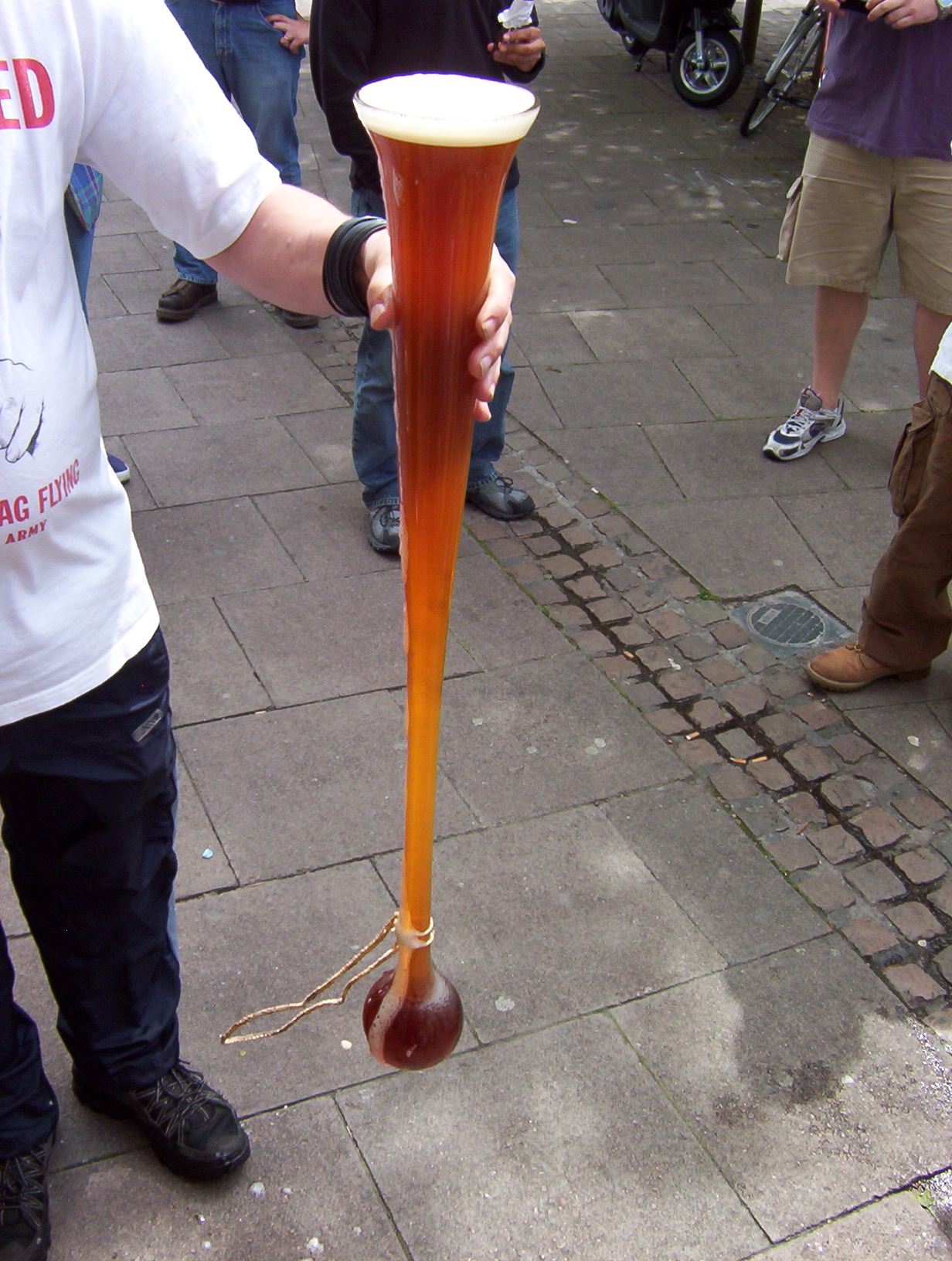
Image Source: upload.wikimedia.org
Deciphering Beer Measurements
Let’s start with the basics. Beer measurements aren’t always straightforward. We have standard units like pints and ounces, but then there are historical or specialty measures like the yard glass.
The Classic Yard Glass
The yard glass itself is a fascinating piece of glassware. It’s a long, thin glass, often with a bulb at the bottom and a wide opening at the top, shaped somewhat like a sword or a jousting lance. The “yard” in its name refers to its length, not its liquid capacity in terms of standard yards.
- Capacity: Typically holds around 3 pints.
- Volume: This translates to roughly 1.5 liters or 50 fluid ounces.
- Serving: It’s usually a novelty item, meant for special occasions or as a drinking challenge. Drinking from a yard glass requires a bit of skill to avoid spilling, as the beer flows out due to gravity when tilted.
Why the Curiosity?
People often ask “how much is in a yard of beer?” because it’s an unusual measure. It sparks curiosity about novelty drinking, party traditions, and the sheer volume of beer involved. It’s a fun conversation starter and a way to understand different beer quantities.
Fathoming Beer Volume in Kegs
When you buy beer for a party or a bar, you’re likely dealing with kegs. Kegs come in various sizes, and knowing these sizes is crucial for managing your beer supply. This directly relates to the total beer volume you have available.
Common Keg Sizes
Kegs are essentially large metal containers designed to hold beer under pressure. Their sizes are standardized, though names can sometimes vary by region.
Table: Common Keg Sizes and Volumes
| Keg Name | Volume (Gallons) | Volume (Liters) | Approximate Pints | Approximate 12oz Servings |
|---|---|---|---|---|
| Pony Keg | 7.75 | 29.3 | 62 | 83 |
| Quarter Barrel | 7.75 | 29.3 | 62 | 83 |
| Slim Quarter | 7.75 | 29.3 | 62 | 83 |
| Half Barrel (Full Size) | 15.5 | 58.7 | 124 | 165 |
| 1/6 Barrel (Sixtel) | 5.17 | 19.6 | 41 | 55 |
| 1/4 Barrel | 7.75 | 29.3 | 62 | 83 |
- Half Barrel: This is the most common keg size for parties and events in the United States. It holds 15.5 gallons of beer.
- Quarter Barrel: Often called a “quarter keg,” it holds 7.75 gallons. This is a good option for smaller gatherings.
- Sixth Barrel (Sixtel): This is becoming increasingly popular, especially for craft beer. It holds about 5.17 gallons.
- Pony Keg: This is another term for a smaller keg, often around 7.75 gallons, similar to a quarter barrel.
How much beer in a keg?
To answer “how much beer in a keg?”, you need to know the keg’s size. A standard half-barrel keg has 15.5 gallons of beer.
Beer Dispenser Capacity
When you use a keg, you often connect it to a beer dispenser or a tap system. The dispenser’s capacity isn’t about how much beer it holds within the dispenser itself, but rather how it manages and serves the beer from the keg.
- Tap Handles: The number of tap handles on a dispenser determines how many different types of beer can be served simultaneously from separate kegs.
- Cooling: Beer dispensers are designed to keep the beer at the optimal serving temperature.
Grasping Beer Consumption and Serving Sizes
Beyond kegs, we need to think about individual servings. This is crucial for parties and understanding overall beer consumption.
Serving Size Beer
The standard serving size for beer varies, but common measures include:
- 12 fl oz: This is a very common size for bottles and cans in the US.
- 16 fl oz: Often found in “pint” glasses or larger cans.
- Pint: Traditionally 16 fluid ounces in the US, though historically it could vary.
How many beers in a keg?
This question depends on the keg size and the serving size you’re using. Let’s look at a half-barrel keg (15.5 gallons).
- With 12 oz servings: A half-barrel keg contains approximately 165 (12 oz) beers.
- With 16 oz servings: A half-barrel keg contains approximately 124 (16 oz) beers.
Beer Consumption Trends
Beer consumption is a significant part of social gatherings and individual habits. Knowing how much beer people typically drink helps in planning events.
- Party Planning: If you’re hosting, estimating beer consumption per guest is key. A common rule of thumb is 2-3 drinks per person for the first hour, and then 1-2 drinks per hour after that.
- Variety: Offering a variety of beers can increase consumption as guests explore different options.
- Occasion: Beer consumption can differ greatly depending on the event, the time of day, and the attendees.
Beer Barrels: A Historical Perspective
The term “barrel” in beer measurements has historical roots. While modern kegs are metal, older beer containers were often wooden barrels. The size of these barrels could vary.
- Traditional Barrel Size: Historically, a barrel of beer could be around 31.5 gallons. This is different from today’s common keg sizes.
- Evolution of Containers: The shift from wooden barrels to metal kegs improved hygiene, durability, and ease of transport and dispensing.
Interpreting Beer Quantity in Different Contexts
Let’s bring it all together and look at how beer quantity is perceived and managed.
Practical Applications of Beer Measurements
- Home Brewing: Homebrewers need to track beer volume precisely from the initial mash to the final bottled or kegged product.
- Bars and Restaurants: Managing inventory, calculating profits, and ensuring consistent serving sizes all rely on accurate beer measurements.
- Events and Festivals: Large-scale events require careful planning of beer supplies, often involving many kegs.
Comparing Beer Volume Units
It’s helpful to see how different beer volume units relate to each other.
Table: Beer Volume Equivalents
| Unit | Fluid Ounces (US) | Liters | Pints (US) | Gallons (US) |
|---|---|---|---|---|
| 1 Fluid Ounce | 1 | 0.0296 | 0.0625 | 0.0078125 |
| 1 Liter | 33.81 | 1 | 2.11 | 0.264 |
| 1 Pint (US) | 16 | 0.473 | 1 | 0.125 |
| 1 Gallon (US) | 128 | 3.785 | 8 | 1 |
| Yard of Beer | ~50 | ~1.5 | ~3 | ~0.39 |
| Half Barrel | 15.5 Gallons | 58.7 | 124 | 15.5 |
As you can see from the table, a yard of beer is a relatively small quantity compared to a half barrel keg, holding about 50 ounces.
Frequently Asked Questions (FAQ)
Q1: What is a yard of beer exactly?
A1: A yard of beer is a very tall, novelty glass that holds about three pints of beer, or roughly 50 fluid ounces (about 1.5 liters).
Q2: Why is it called a “yard” of beer?
A2: It’s called a yard of beer because the glass is approximately a yard (3 feet) long, not because it holds a yard of liquid in the imperial measurement.
Q3: How much beer is in a standard keg?
A3: The most common keg size in the US is a half barrel, which holds 15.5 gallons of beer.
Q4: How many beers can I get from a half barrel keg?
A4: You can typically get about 165 servings if you’re pouring 12-ounce beers, or about 124 servings if you’re pouring 16-ounce beers.
Q5: Are there different keg sizes?
A5: Yes, common keg sizes include half barrels (15.5 gallons), quarter barrels (7.75 gallons), and sixth barrels or sixtels (5.17 gallons).
Q6: Does a beer dispenser hold beer?
A6: A beer dispenser doesn’t hold the beer itself; it’s the system that connects to a keg, chills the beer, and allows it to be served through taps.
Q7: What is the typical beer serving size?
A7: Common beer serving sizes are 12 fluid ounces (found in bottles/cans) and 16 fluid ounces (often in pint glasses).
Q8: Is a yard of beer a lot to drink?
A8: Yes, 50 fluid ounces of beer is a significant amount, equivalent to about three standard pints. It’s often considered a challenge or a novelty.
Q9: How do beer measurements differ from historical beer barrels?
A9: Historically, a beer barrel could be around 31.5 gallons, a larger volume than most modern kegs. The shift to standardized metal kegs changed beer container measurements.
Q10: What are the important beer measurements for planning a party?
A10: Key measurements include keg sizes (like half barrels), the number of servings per keg based on your chosen serving size (e.g., 12oz or 16oz), and estimating per-person beer consumption.
This exploration into “how much is in a yard of beer?” has taken us from novelty glasses to the practicalities of kegs and serving sizes. Whether you’re curious about a yard glass, planning a party, or just want to know how much beer is in your favorite keg, understanding these beer measurements is key.