
Ever stared at a pile of wood or metal, wishing for a tool that could slice through it cleanly and precisely? A band saw might be the answer you’re looking for! These amazing machines are workhorses in workshops everywhere, capable of making smooth, curved cuts that other saws just can’t handle.
But choosing the right band saw can feel like a maze. Do you need a big one for thick lumber, or a smaller one for delicate craftwork? Should you focus on power, blade size, or throat depth? Getting it wrong means wasted time and frustrating results. Many woodworkers and metalworkers feel lost when faced with all the different models and features.
This post cuts through the confusion! We will break down everything you need to know about band saws. You will learn the key features to look for, understand the differences between models, and finally feel confident picking the perfect machine for your projects.
Ready to transform how you cut materials? Let’s dive into the world of band saws and discover the best one for you.
Top Band Saw Recommendations

- 2.8-amp motor rotates the blade up to 2500 feet per minute
- Create cuts up to 3-1/2 inches deep and 9 inches wide
- Uses 59-1/2-inch blades anywhere from 1/8 to 3/8 inches in size
- Spacious 12-1/4 x 11-7/8-inch work table bevels up to 45 degrees
- Includes a 1/4-inch-wide blade, a 2-1/2-inch dust port, a rip fence, a miter gauge, an adjustable blade guard with ball-bearing supports, and a 2-year warranty


- 13" RESAW CAPACITY FOR THICK STOCK - A 1.75 HP capacitor-run motor and 116" blade loop resaw material up to 13" tall in one pass, so you can slice thick slabs into bookmatched panels or veneer without a second machine.
- GROUND CAST-IRON TABLE, TILTS 0–45° RIGHT - The 360 sq. in. ground cast-iron table tilts 0–45° right on a diecast-and-steel trunnion for bevel cuts. An occasional coat of paste wax on the table keeps stock moving smoothly and helps prevent surface rust.
- BUILT FOR WOOD & BOARD - Engineered for hardwood, softwood, and manufactured board in home and small production wood shops; this is a woodworking band saw.
- 14" WHEELS, 1/8"–3/4" BLADE RANGE - Runs 116"-long blades from 1/8" wide for tight scroll cuts to 3/4" wide for fast resawing, with a 13-1/2" throat capacity and independently adjustable ball-bearing blade guides for precision.
- READY TO CUT, BACKED FOR 5 YEARS - Includes the band saw, steel stand, machined-aluminum resaw fence with easy-read scale, and hardware pack; saw blade is sold separately, and every unit is backed by JET’s 5-year warranty and parts support.

- 5'' Cutting Capacity
- Integrated hang hook allows user to hang the saw without damaging the front handle or base
- LED Work Light with 20 second delay illuminates dark work surfaces for accurate cutting.
- Tool less blade changing lever loosens blade tension
- Variable Speed for versatility and control
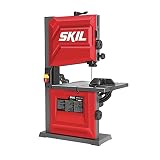
- POWERFUL 2.8 AMP INDUCTION MOTOR—Rip through a variety of wood materials with the 2.8 amp induction motor
- 2-SPEED DRIVE SYSTEM—Allows tool-free belt tensioning
- QUICK BLADE TENSION SETTING—Set blade tension quickly and accurately for clean cuts
- PRECISION BALL BEARING AND LOWER BLADE GUIDES—Ensure consistent tracking for accurate cutting performance
- RACK AND PINION TABLE ADJUSTMENT—Makes quick angle adjustments

- 3.5 amp motor creates cuts up to six inches deep and 9-3/4 inches wide
- Uses 72-inch blades anywhere from 1/8 to 1/2 inches in size
- Spacious 14-1/8 x 12-1/2 inch cast aluminum work table bevels up to 45 degrees
- Operates at two speeds of either 1520 or 2620 FPM
- Includes a 2-year warranty, a work light, a 3-in-1 dust port, a fence, a miter gauge, and a 3/8-inch blade (6 TPI)

- ENCLOSED CABINET STAND, RISER-READY TO 12" — The closed cabinet stand houses the 1 HP motor and V-belt drive behind a latching door. The saw cuts 6" tall out of the box, and the optional JET JRB-14 Riser Block Kit (708717, sold separately) raises depth of cut to 12" for wider resawing.
- CAST-IRON TABLE AND FRAME, BALANCED WHEELS — A 15" x 15" offset cast-iron table gives more work area in front of the blade, and the cast-iron frame and computer-balanced six-spoke 14" wheels run smoothly for accurate blade tracking, set with a single tracking knob and wing-nut lock.
- FOR WOOD ONLY: NOT FOR METAL, BONE, OR MEAT — Built for curves, scrollwork, ripping and resawing hardwood, softwood and manufactured board in the home shop. This is a single-speed (3,000 SFPM) woodworking band saw; it is not designed for cutting metal, bone, or meat.
- BLADE GUIDES, TABLE TILT, AND CAPACITY — Composite upper and lower guide blocks with ball-bearing blade support run 1/8" to 3/4" wide, 93-1/2" blades. The table tilts 45° right and 10° left, with a 3/8" x 3/4" miter slot, 13-1/2" throat, and 4" dust port.
- WHAT'S INCLUDED, BACKED FOR 5 YEARS — Ships in two boxes: saw body, closed stand with motor, table, pulley cover, V-belt, hardware, and a 3/8" 6 TPI blade. Prewired 115V, convertible to 230V. 5-year JET warranty.

- 5-amp motor tackles cuts up to six inches deep and 9-1/2 inches wide
- Accepts 72-inch blades anywhere from 1/8 to 1/2 inches wide
- Spacious 14-1/8 x 12-1/2 inch cast-aluminum work table bevels up to 45 degrees
- Operates at two speeds of either 1520 or 2620 FPM
- Includes a 2-year warranty, a flexible work light, a 3-in-1 dust port, a fence, a miter gauge, a stand, and a 3/8-inch blade (6 TPI)

- Huge Cutting Capacity: The cutting capacity of the band saw: without base: 4.7"x4.7" deep-cut capacity for rectangular stock, 5" capacity for round stock. With base: 3.9"x3.2" deep-cut for rectangular stock, 3.93" for round stock.
- Powerful Motor: 1100W 10 amp powerful, pure copper motor, designed with controlled power to withstand any jobsite application. Cutting Speed: 137.8-472.4ft/min, provides quick and smooth cutting with no sparks and burrs.
- Ergonomics Design: Superior balance allows for more accurate cuts. Ergonomic soft grip back handle provides comfort during use. The saw blade guard can be adjusted to avoid the saw blade from jamming and is safer without hurting your hands.
- Simple Operation: 45°-90° Cutting with Removable Alloy Steel Base, The base can also be Swiveled angle from 0° - 45°. It is easy to disassemble. With this workbench base, you can keep the cutting material stable and secure.
- Extensive Use: This metal cutting bandsaw fits for cutting metal, steel, aluminum, and composite cable. Besides, It can be used for angle iron, PVC pipe, and any similar material.
Your Essential Guide to Choosing the Right Band Saw
A band saw is a powerful tool. It cuts various materials using a long, continuous blade. Whether you are a hobbyist or a professional woodworker, selecting the right band saw matters. This guide helps you find the perfect machine for your needs.
Key Features to Look For
When shopping for a band saw, several features make a big difference in performance and ease of use.
Motor Power (Horsepower – HP)
The motor is the heart of the machine. More horsepower lets you cut harder materials and thicker stock easily. For light hobby use, 1/3 HP might work. Serious woodworkers should look for 1 HP or more. A stronger motor keeps cutting smoothly, even under pressure.
Resaw Capacity
Resawing means slicing thick boards into thinner ones. The resaw capacity tells you the maximum height the blade can cut under the upper wheel guard. If you plan to resaw lumber, aim for at least 6 inches of capacity. Larger saws often offer 12 inches or more.
Throat Size
The throat size is the distance from the blade to the main frame (the column). This limits the width of the material you can cut around a curve. A standard size is 14 inches. Bigger projects need saws with 16-inch or 20-inch throats.
Blade Speed (SFPM)
Speed is measured in Surface Feet Per Minute (SFPM). Good band saws offer variable speeds. You need slow speeds for metal and plastics. Fast speeds work best for softwoods. Check if the saw has a simple way to change speeds.
Important Materials and Construction
The quality of the materials directly impacts the saw’s lifespan and vibration levels.
- Frame Material: Most good saws use heavy cast iron frames. Cast iron absorbs vibrations well. This keeps the cut straight and the machine stable. Thin, stamped steel frames vibrate too much and reduce accuracy.
- Wheels: The wheels guide the blade. Look for balanced cast iron or aluminum wheels. Properly balanced wheels reduce wobble at high speeds.
- Guide System: Blade guides support the blade during the cut. Ball-bearing guides are superior to simple blocks. They reduce friction and keep the blade cool.
Factors That Improve or Reduce Quality
Quality isn’t just about power; it’s about precision and durability.
Quality Enhancers:
Excellent features improve your results. A good fence and miter gauge ensure accurate straight and angled cuts. Tool-less blade tensioning makes changing blades fast and correct. A dust collection port keeps your work area cleaner, which improves visibility.
Quality Reducers:
Cheap components cause frustration. Flimsy plastic knobs wear out quickly. Poorly aligned wheels cause the blade to drift off track. If the table tilt mechanism is hard to lock down, your angle settings will shift during a cut.
User Experience and Use Cases
Think about what you will use the saw for most often.
Woodworking (General): Most woodworkers need a 14-inch saw with good resaw capacity (around 6-8 inches) and variable speed. This handles curves, general breaking down of lumber, and small scrollwork.
Metal Cutting: Cutting metal requires much slower speeds and a very sturdy, heavy frame to handle the stress. Metal-cutting band saws often have specialized gearboxes for very low SFPM.
Scrollwork/Hobby Use: Smaller benchtop models work well here. They need excellent blade tracking and fine speed control for detailed curves.
Ease of setup matters greatly. Can you quickly adjust the blade guides? Does the machine require constant fiddling to keep the blade running straight? A good user experience means you spend more time cutting and less time tuning.
Band Saw Buying Guide FAQ
Q: What is the main difference between a vertical and a horizontal band saw?
A: A vertical band saw stands upright; you feed material down onto the blade. This is common for woodworking and intricate cuts. A horizontal band saw lays on its side; you clamp the material and bring the blade through it. Horizontal saws are mainly used for cutting metal stock straight.
Q: How often should I change the band saw blade?
A: You should change the blade when it becomes dull, chipped, or if you notice the cut quality dropping significantly. If you switch between cutting wood and metal, you must change the blade entirely, as the tooth size and material are different.
Q: What does “blade tension” mean, and why is it important?
A: Blade tension is how tightly the blade is stretched between the upper and lower wheels. Proper tension keeps the blade running straight and prevents it from slipping or breaking. Too loose, and it wanders; too tight, and it can snap.
Q: Can I cut plastic on a wood band saw?
A: Yes, you can cut most plastics. However, you must use a blade with many small teeth per inch (TPI) and run the saw at a slow speed. Fast speeds can melt the plastic, causing it to gum up the blade.
Q: What is the purpose of a miter slot on the band saw table?
A: The miter slot holds a miter gauge, similar to one on a table saw. This helps you make accurate crosscuts at specific angles, usually 90 or 45 degrees, across the material.
Q: Should I buy a floor model or a benchtop model?
A: Floor models are larger, heavier, and have more power and resaw capacity. Benchtop models save space and are fine for light hobby work. If you plan heavy use or large cuts, choose a floor model.
Q: What is blade drift?
A: Blade drift happens when the blade cuts slightly to the side, even if you are pushing the wood straight. This often results from incorrect blade tension or worn-out blade guides.
Q: How important is dust collection on a band saw?
A: Dust collection is very important. Band saws create a lot of fine sawdust. A good dust port helps keep your view clear and protects your lungs from inhaling fine particles.
Q: What is the recommended tooth count (TPI) for general woodworking?
A: For general-purpose wood cutting, a blade with 3 or 4 TPI is usually recommended. If you are doing very fine scrollwork, you might use 10 or more TPI.
Q: Does a band saw need to be bolted down?
A: While benchtop models can sit on a sturdy workbench, floor models should always be secured to the floor or a heavy stand. This prevents the machine from vibrating across the floor during heavy use.