
Does your lawn look more patchy and yellow than the vibrant green carpet you dream of? Many homeowners feel frustrated when their grass just won’t thrive, no matter how much they water it. Choosing the right lawn nutrients can feel like cracking a secret code. You see bags labeled N-P-K, slow-release, and organic, and it’s easy to get overwhelmed and just guess. Picking the wrong food can lead to wasted money or, worse, a damaged lawn.
But what if you could finally understand exactly what your grass needs to grow strong and stay deep green all season long? This guide cuts through the confusing jargon. We will break down the essential nutrients simply, showing you how to read labels like a pro and match the perfect food to your soil. Keep reading to discover the straightforward steps to unlock your lawn’s full potential and enjoy the envy of the neighborhood.
Top Lawn Nutrients Recommendations

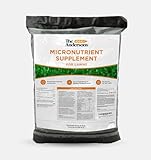


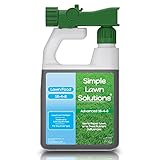


The Ultimate Buying Guide for Lawn Nutrients
Giving your lawn the right food makes it look green and strong. Choosing the right lawn nutrient can seem tricky. This guide helps you pick the best feed for your grass.
Key Features to Look For
When you buy lawn food, check these things first.
- **NPK Ratio:** This is the most important feature. NPK stands for Nitrogen (N), Phosphorus (P), and Potassium (K). Nitrogen makes grass green and leafy. Phosphorus helps roots grow deep. Potassium helps the grass stay strong against heat and cold. Look for a ratio that matches what your lawn needs. A good all-around fertilizer might be 10-10-10 or something higher in Nitrogen like 24-0-10.
- **Release Speed:** Some nutrients feed the lawn right away. Others release slowly over weeks or months. Slow-release fertilizers prevent sudden growth spurts and burn. They feed the lawn steadily.
- **Formulation Type:** Nutrients come as granules (small pellets) or liquids. Granules are easy to spread evenly with a spreader. Liquids mix with water and spray on. Liquids often work faster.
- **Weed or Pest Control:** Some products combine food with weed killer (herbicide) or bug killer (insecticide). Decide if you need a combined product or separate ones.
Important Materials in Lawn Nutrients
The ingredients matter a lot. Good quality nutrients use better sources for NPK.
- **Nitrogen Sources:** Look for sources like Urea, Ammonium Sulfate, or slow-release forms like Sulfur-Coated Urea (SCU) or Polymer-Coated Urea (PCU). SCU and PCU break down slowly, which is great quality.
- **Micronutrients:** These are tiny amounts of other minerals your grass needs, like Iron or Magnesium. Iron makes grass very green without forcing too much growth.
Factors That Improve or Reduce Quality
The quality of your lawn nutrient affects how well it works and how long it lasts.
Factors That Improve Quality:
- **Slow-Release Coating:** Products with good coatings release nutrients over 6 to 12 weeks. This means fewer applications for you.
- **High Iron Content:** Iron gives a deep, dark green color quickly.
- **Quality Spreader Use:** Even application, whether granular or liquid, ensures your entire lawn gets fed properly.
Factors That Reduce Quality:
- **High Salt Content:** Some quick-release fertilizers have high salt levels. These can damage or “burn” your grass blades if you use too much or water poorly.
- **Poor Spreading:** If you apply too much in one spot, the grass will burn there, creating yellow or brown patches.
User Experience and Use Cases
Think about how you plan to use the product.
For beginners, **granular, slow-release fertilizers** are often the easiest to use. You spread them with a machine, and they feed the lawn for a long time. This reduces mistakes.
If you have a specific problem, like pale yellow grass, you might need a **liquid iron application** for a quick fix. This is a targeted use case.
If you are starting a new lawn from seed, you need a **starter fertilizer** which has higher Phosphorus (the middle number in NPK) to help the tiny roots establish themselves. Do not use weed-and-feed products on new seed; they stop seeds from growing!
10 Frequently Asked Questions (FAQ) About Lawn Nutrients
Q: How often should I fertilize my lawn?
A: Most lawns need fertilizer 3 to 4 times a year, depending on your grass type and climate. Always follow the product directions.
Q: What is the best NPK ratio for an established lawn?
A: For general feeding during the growing season, look for a higher first number (Nitrogen), such as 24-0-10 or 30-0-5.
Q: Can I fertilize when it’s very hot outside?
A: Avoid applying high-Nitrogen fertilizers when temperatures are consistently above 90°F (32°C). Wait for cooler weather to prevent burning the grass.
Q: Do I need to water the lawn after applying granular fertilizer?
A: Yes, always water thoroughly after applying granular food. Watering washes the nutrients down to the roots and helps prevent the granules from burning the grass blades.
Q: What is the difference between weed and feed products?
A: “Weed and feed” products combine fertilizer with a weed killer. They work well when weeds are actively growing, but be careful applying them near desirable flowers or trees.
Q: When should I apply the first fertilizer of the year?
A: Apply the first feeding when your grass starts actively growing again in the spring, usually when the grass blades are about two inches tall.
Q: What does “micronutrient” mean?
A: Micronutrients are essential minerals like Iron, Zinc, and Manganese. Your grass needs them, but only in very small amounts.
Q: Is organic fertilizer better than synthetic fertilizer?
A: Organic fertilizers (like compost or manure) release nutrients slowly and improve soil health over time. Synthetic fertilizers work faster. Many homeowners use a mix of both.
Q: Can I use a fertilizer meant for vegetable gardens on my lawn?
A: It is best not to. Lawn fertilizers are balanced for grass needs, especially high Nitrogen. Vegetable fertilizers often have too much Phosphorus, which is restricted in many areas for lawn use.
Q: How do I know if my lawn needs more Potassium (K)?
A: Potassium helps grass handle stress like drought or disease. If your lawn struggles during tough weather, a fertilizer higher in Potassium might help.