
A cubic yard of dirt is a measurement of volume. Specifically, it’s a cube that measures three feet long, three feet wide, and three feet high. If you’re wondering how much dirt to buy for your landscaping project, this measurement is key.
Whether you’re building a raised garden bed, adding topsoil to your lawn, or creating a new flower bed, knowing how much soil you need is crucial. Buying too little means a frustrating trip back to the garden center, while buying too much can be a waste of money and effort. This guide will help you calculate your landscaping soil quantities with confidence, ensuring you have just the right amount of dirt for your project. We’ll break down how to calculate dirt volume and introduce tools like a dirt calculator or soil yardage calculator to make the process simple.
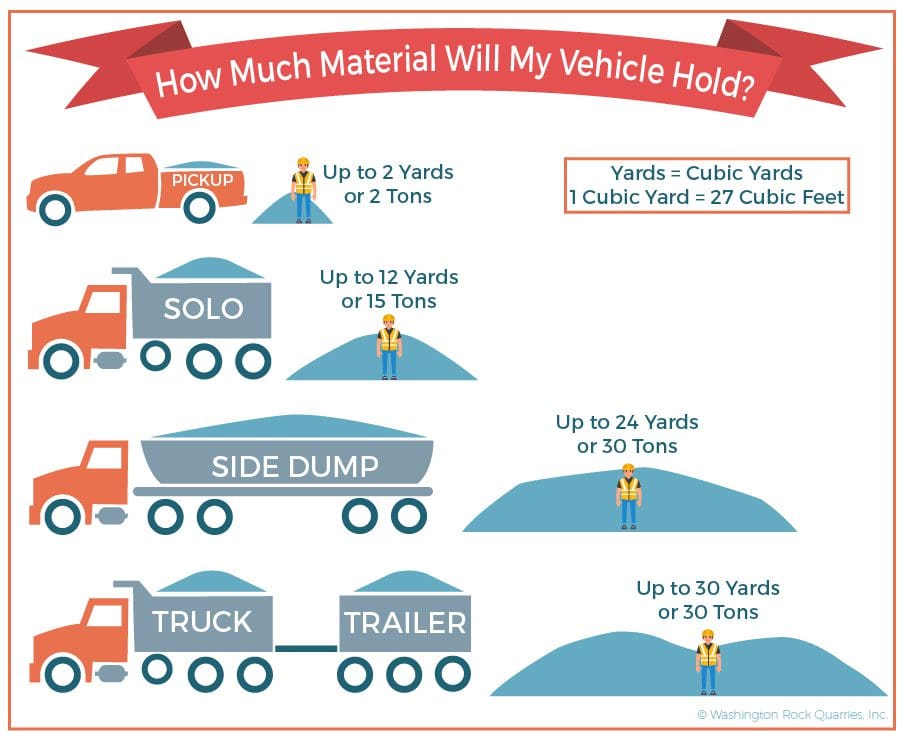
Image Source: www.wa-rock.com
The Basics of Measuring Soil Volume
When you visit a garden supply store or a landscape material provider, you’ll almost always see soil, mulch, and other bulk materials sold by the cubic yard. So, what is a cubic yard of dirt in practical terms? Imagine a cube three feet on each side. That’s your cubic yard. It’s a substantial amount, and getting the calculation right is important.
Why Accurate Measurement Matters
- Cost-Effectiveness: Overbuying means spending more than necessary. Underbuying leads to extra trips and potentially higher costs if you need a small amount delivered separately.
- Project Completion: Having enough material ensures your project can be finished without delays.
- Efficiency: Proper planning saves time and physical effort. You won’t be hauling excess dirt or making multiple trips for more.
Simple Conversions to Keep in Mind
While you’ll be working with cubic yards, understanding some basic conversions can be helpful:
- 1 cubic yard = 27 cubic feet
- 1 cubic yard = approximately 30-35 large bags of topsoil (bags typically contain 0.5 to 1 cubic foot of soil)
- 1 cubic yard = approximately 200 gallons
Step-by-Step Guide to Calculating Your Soil Needs
To figure out how much dirt to buy, you need to measure the area you want to fill and the desired depth of the soil.
Step 1: Measure Your Area
You’ll need to measure the length and width of the area you plan to fill with soil.
For Rectangular or Square Areas
If your project area is a simple rectangle or square, like a garden bed or a patch of lawn you’re leveling, use a tape measure.
- Length (L): Measure the longest side of the area.
- Width (W): Measure the shortest side of the area.
Make sure your measurements are in the same unit, preferably feet, as this will simplify the final calculation for what is a cubic yard of dirt.
For Circular Areas
If your project involves a circular area, such as around a tree or a round garden bed, you’ll need to measure the diameter.
- Diameter (D): Measure across the widest part of the circle, passing through the center.
For Irregular Areas
For more complex shapes, you can break them down into simpler shapes (rectangles, squares, triangles, circles) and calculate the volume for each section, then add them together. Alternatively, you can approximate the area by pacing it out or using online mapping tools.
Step 2: Determine the Desired Depth
The next step is to decide how deep you want the soil layer to be. This is often expressed in inches.
- Gardens: Typically need 4-12 inches of good quality topsoil.
- Lawns: Might require 2-4 inches of topsoil for leveling or establishing new grass.
- Raised Beds: Depth will depend on the height of the bed, usually 6 inches to 2 feet or more.
- Decorative Mulch/Gravel: Usually 2-4 inches.
It’s important to convert your desired depth from inches to feet for the calculation.
- Conversion: Divide the depth in inches by 12.
- Example: 6 inches / 12 = 0.5 feet
- Example: 4 inches / 12 = 0.33 feet
Step 3: Calculate the Volume in Cubic Feet
Now, you’ll use your measurements to calculate the total volume of soil needed.
For Rectangular or Square Areas
The formula for volume is Length × Width × Depth.
- Volume (cubic feet) = Length (feet) × Width (feet) × Depth (feet)
For Circular Areas
The formula for the volume of a cylinder (which a circular bed of soil approximates) is π × radius² × depth. Remember that the radius is half the diameter.
- Radius (R) = Diameter (D) / 2
- Volume (cubic feet) = π × R² × Depth (feet)
- (Using π ≈ 3.14)
For Irregular Areas
As mentioned, break down into simpler shapes or use approximations. This is where a soil yardage calculator can be particularly helpful.
Step 4: Convert Cubic Feet to Cubic Yards
Since soil is typically sold in cubic yards, you need to convert your total cubic feet into cubic yards.
- Formula: Cubic Yards = Total Cubic Feet / 27
This conversion is fundamental to using a dirt calculator or understanding landscaping soil quantities.
Using a Dirt Calculator or Soil Yardage Calculator
Many online tools can simplify this process. These are often called dirt delivery calculators or simply soil calculators. You input your dimensions (length, width, depth) and the calculator automatically provides the volume in cubic yards.
How to Use Online Calculators:
- Find a Reputable Calculator: Search for “soil calculator,” “dirt calculator,” or “cubic yard calculator.” Many landscape supply companies offer these on their websites.
- Select the Shape: Most calculators allow you to choose between rectangular, circular, or sometimes triangular shapes.
- Enter Your Measurements: Input the length, width, and depth you determined in Step 1 and Step 2. Ensure you use the correct units (usually feet for dimensions and inches for depth, with the calculator handling the conversion).
- Get Your Result: The calculator will display the total cubic yards of soil needed.
These tools are excellent for quickly and accurately answering how much dirt to buy.
Practical Examples
Let’s walk through a few common landscaping scenarios.
Example 1: Rectangular Garden Bed
You want to create a rectangular garden bed that is 10 feet long and 5 feet wide. You want to fill it with 6 inches of new topsoil.
- Length: 10 feet
- Width: 5 feet
- Depth: 6 inches = 0.5 feet
Calculation:
Volume (cubic feet) = 10 ft × 5 ft × 0.5 ft = 25 cubic feet
Cubic Yards = 25 cubic feet / 27 = 0.93 cubic yards
Result: You would need approximately 1 cubic yard of dirt. It’s often wise to round up slightly for soil projects to account for settling and any minor measurement inaccuracies.
Example 2: Circular Flower Bed
You are creating a circular flower bed with a diameter of 8 feet and want a depth of 4 inches of soil.
- Diameter: 8 feet
- Radius: 8 ft / 2 = 4 feet
- Depth: 4 inches = 0.33 feet (approximately)
Calculation:
Volume (cubic feet) = π × (4 ft)² × 0.33 ft
Volume (cubic feet) = 3.14 × 16 sq ft × 0.33 ft
Volume (cubic feet) = 16.58 cubic feet
Cubic Yards = 16.58 cubic feet / 27 = 0.61 cubic yards
Result: You would need approximately 0.75 to 1 cubic yard of dirt. Again, rounding up is a good practice.
Example 3: Leveling a Lawn Area
You need to level a rectangular patch of your lawn that is 20 feet long and 15 feet wide, requiring a 3-inch layer of soil.
- Length: 20 feet
- Width: 15 feet
- Depth: 3 inches = 0.25 feet
Calculation:
Volume (cubic feet) = 20 ft × 15 ft × 0.25 ft = 75 cubic feet
Cubic Yards = 75 cubic feet / 27 = 2.78 cubic yards
Result: You would need approximately 2.75 to 3 cubic yards of dirt. This is a good example where a dirt delivery calculator would be very useful, as you’ll likely need a bulk delivery.
Factors Affecting Soil Quantity
Beyond the basic measurements, several factors can influence how much soil you actually need.
Settling and Compaction
Freshly delivered or bagged soil is often aerated and may contain more volume than it will after settling. Rain, foot traffic, and natural compaction will reduce the soil’s height over time. It’s common for soil to settle by 10-20%. Therefore, when calculating how much dirt to buy, it’s always a good idea to add a little extra, perhaps 10%, to account for this.
Soil Type and Purpose
- Topsoil: Usually purchased for general landscaping, filling beds, and improving lawns.
- Compost: Often mixed with topsoil to enrich it. Compost also settles.
- Mulch/Gravel: While not soil, these are often measured in cubic yards for landscaping projects. Their settling properties can also vary.
The intended use of the soil will dictate the required depth. For instance, a new lawn needs less depth than a raised vegetable garden.
Delivery vs. Bags
- Bulk Delivery: When you order a cubic yard of dirt or more, it’s typically delivered in a large truck. This is often more cost-effective for larger projects and means you have one or a few large piles to spread.
- Bagged Soil: Smaller projects might use bagged soil. While convenient for small jobs, the cost per cubic yard is significantly higher. Remember that one cubic yard is equivalent to many bags.
When to Call a Professional
For very large projects or when you’re unsure about measurements, consulting with a landscape designer or contractor can be beneficial. They have experience with landscaping soil quantities and can accurately estimate needs for extensive projects, ensuring you get the right amount of material delivered by a reliable dirt delivery calculator user.
Frequently Asked Questions About Soil Volume
Here are some common questions people have when calculating their soil needs:
Q1: What is a cubic yard of dirt?
A1: A cubic yard of dirt is a unit of volume equal to a cube that is three feet long, three feet wide, and three feet high. It’s the standard way bulk soil and other landscaping materials are sold.
Q2: How do I calculate the amount of dirt needed for my garden?
A2: You need to measure the length and width of your garden area and decide on the depth of soil you want. Then, calculate the volume in cubic feet (Length × Width × Depth in feet) and divide by 27 to get cubic yards. Using an online dirt calculator can simplify this.
Q3: My project area is circular, how do I calculate the dirt needed?
A3: Measure the diameter of the circle and divide by two to get the radius. Then use the formula: Volume (cubic feet) = π × radius² × depth (in feet). Divide the result by 27 to get cubic yards.
Q4: How much soil do I need to add to my lawn?
A4: For most lawn leveling or seeding, a depth of 2 to 4 inches is recommended. Calculate this volume using the length and width of the lawn area you are treating and the desired depth.
Q5: What is the best way to estimate landscaping soil quantities for a large project?
A5: For large projects, it’s best to accurately measure your area and desired depth. Many suppliers offer a soil yardage calculator on their website. For very large or complex jobs, consider consulting a professional landscaper.
Q6: Why should I always add extra soil to my order?
A6: Soil naturally settles and compacts over time due to rain, gravity, and activity. Adding an extra 10% to your calculated amount helps ensure you have enough after settling occurs.
Q7: How many bags of soil make a cubic yard?
A7: This varies by bag size, but typically, a cubic yard of dirt is equivalent to about 30-35 standard 1-cubic-foot bags of topsoil. Always check the volume stated on the bag.
By following these steps and using the available tools, you can confidently determine exactly how much dirt to buy for your next landscaping project, ensuring a successful and beautiful outcome.