
Do you ever look at stunning photos and wonder how photographers capture such amazing detail and beautiful, blurry backgrounds? The secret often lies in the camera sensor size. Full Frame Mirrorless cameras are the talk of the photography world right now. They pack professional-level image quality into smaller, lighter bodies. It sounds perfect, but choosing the right one can feel like a maze!
Finding the best Full Frame Mirrorless camera is tough because there are so many brands and models. You worry about spending too much money or picking a camera that won’t grow with your skills. Many people feel overwhelmed by technical jargon like megapixels and frame rates. They just want a camera that takes incredible pictures without the headache.
This guide cuts through the confusion. We will break down what makes these cameras special. You will learn which features truly matter for your style of shooting. By the end, you will feel confident about selecting the perfect Full Frame Mirrorless camera for your adventures. Let’s dive in and unlock your best photos yet!
Top Full Frame Mirrorless Camera Recommendations

- Compact, Lightweight and High-Quality RF Lens with a Versatile Zoom Range of 24-105 millimeter
- Optical Image Stabilization at up to 5 stops of shake correction
- Maximum Magnification of 0.4x and Minimum Focusing Distance of 0.66 feet in Auto Focus.
- Maximum Magnification of 0.5x and Minimum Focusing Distance of 0.43 ft. when using Center Focus Macro.
- Use the EOS Utility Webcam Beta Software (Mac and Windows) to turn your Canon camera into a high-quality webcam, or do the same using a clean HDMI output.


- 33MP full-frame Exmor R back-illuminated CMOS sensor.Operating temperature : 0 to 40 °C (32 to 104 °F), Rated input : 100 - 240 V , 50/60 Hz, 0.2 A.
- 8x more powerful, next generation BIONZ XR image processing engine
- Up to 4K 60p 10-bit 4:2:2 w/ full pixel readout in all recording formats
- 7K oversampling full-frame 4K 30p 10-bit 4:2:2 w/ no pixel binning
- Beautiful color expression made simple with S-Cinetone color profile

- High image quality featuring a new 24.2 megapixel full-frame CMOS sensor
- DIGIC X Image Processor with an ISO range of 100-102400, expandable to 204800
- High-speed continuous shooting of up to 12 fps with mechanical shutter and up to 40 fps electronic (silent) shutter, RAW burst mode and pre-shooting captures up to approx. 30 fps
- Dual Pixel CMOS AF II covering up to 100% x 100% area with 1,053 AF zones
- Automatic subject detection of people, animals, and vehicles using deep learning technology with new subjects to detect including aircraft, trains, and horses.(1)

- 24.3MP Full-Frame Mirrorless Camera | Nikon’s most compact, lightweight full-frame interchangeable lens Z series camera
- Outstanding Image Quality | Sharp, lifelike details, vibrant colors and great low-light performance
- 4K/30p and 1080/60p Video Recording | Crisp, smooth videos with shallow depth of field; USB power delivery; HDMI output
- Eye-Detection Autofocus | Automatically locks onto the eyes of people, dogs and cats and tracks them as they move around the frame
- 5-Axis In-Body Image Stabilization | Capture steady handheld videos and sharp photos; shoot at slower shutter speeds in low light without causing camera blur
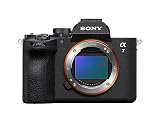
- A partially stacked Exmor RS CMOS image sensor features high-speed circuitry above and below the sensing layer. Sensor readout is approx. 4.5 x*1 faster than the α7 IV, maximum shutter speed is 1/16000 s, *2 blackout-free bursts at up to 30 fps are available with AF/AE tracking, *3 and video can be recorded at 4K 120p.*4 This advanced sensor contributes up to an unprecedented 16 stops of dynamic range*5 with smooth gradations.
- The new BIONZ XR2 processing engine delivers dramatic improvements in image and sound quality, communication, integration, and operation. It also incorporates AI-based Real-time Recognition AF and*6 Real-time Tracking, *7 plus accurate, stable color reproduction. A lightweight RAW format has been included, while user interface, networking, and file management functions have been refined for smooth workflow.
- The new 33.0-megapixel*8 sensor and BIONZ XR2 processing engine work together to deliver up to 16 stops of dynamic range. *9 Lifelike gradations from shadows to highlights enable highly effective HDR processing when needed, and effective noise reduction applied at all sensitivities achieves high resolution throughout the ISO 100-51200 still and movie range (expandable to 50-204800 for stills and 100-102400 for movies).
- An advanced optical stabilization unit, gyro sensors, and algorithm accurately detect and correct image shake. Up to 7.5-step central and 6.5-step peripheral stabilization*14 allows handheld shooting without having to boost sensitivity. The body also works with compatible lenses*15 for even better stabilization. Even shake that is amplified at telephoto focal lengths is effectively suppressed.
- AI processing in the new BIONZ XR2 processing engine improves recognition by approximately 30% over the α7 IV. Human pose estimation technology uses detailed form and pose data to achieve reliable human eye recognition as well as accurate recognition of body and head position, even with challenging subjects. Multiple subjects can also be recognized, making it possible to track the desired subject.

- Advanced 24.2MP Back-Illuminated 35mm Full-frame Image Sensor
- 15-stop4 dynamic range, 14-bit uncompressed RAW4, ISO 50 to 204,800
- Up to 10fps1 Silent5 or Mechanical Shutter with AE/AF tracking
- Eye-AF with AF-C; Direct AF point 4-way multi-selector; touch AF
- 4K2 HDR3 Movie w/ full pixel readout, no pixel binning or crop

- Every little detail matters. 45.7MP. Powerful AF performance. NIKKOR Z lenses. Intuitive functionality. The most sophisticated tool for high resolution imaging.
- Subject acquisition with speed and precision. 3.3x more buffer capacity than the original Z 7. Faster continuous shooting. Improved AF performance and functionality.
- Dual card slots (CFexpress/XQD and UHS-II SD). Flexibility and peace of mind when shooting important moments or on assignment, such as wedding and event photography. Comfortable. Durable. Intuitive. Z 7II’s exterior and interior have been thoughtfully designed to be handled and used with max comfort and ease of operation.
- Vertical Grip Ready. Now compatible with the new vertical battery grip for those in need of more power and easier shutter operation when shooting vertically. 4K UHD 60p video. Smoother action, smoother camera motion and the ability to slow down 4K UHD footage in post. USB-C constant power and charging. Never run low on power during livestreams, video shoots and timelapses.
- One mount accepts them all. Compatible with a growing line of NIKKOR Z lenses as well as approx. 360 F-mount NIKKOR lenses with FTZ mount adapter (sold separately).

- FULL-FRAME CMOS SENSOR: 24.2 effective megapixels (approx.) lets you capture sharp, detailed images even in low-light conditions indoors and outdoors (compatible with Dual Pixel CMOS AF).
- DIGIC X IMAGE PROCESSOR: Enhances digital camera performance and processes, including image stabilization, image processing, and video functionality, for sharp, high-resolution images and video with minimal noise or grain.
- HIGH-SPEED CONTINUOUS SHOOTING: Electronic shutter speeds of up to 40 fps at 20MP let you capture dynamic action shots of athletes, animals, vehicles in motion, or even the split-second changes in facial expressions for portraits.
- ENHANCED SUBJECT ACQUISITION: In addition to people, small animals, cars and motorcycles, the R6 Mark II also easily detects horses, trains, and aircraft, with the option to automatically select the subject type without manually switching.
- ADVANCED HEAD, FACE, EYE DETECTION: Automatically detects and focuses on a person's head, face, or eye—even the left or right eye—plus, effectively tracks the whole body, face, or eye of animals for fast, accurate image or video capture.
Your Guide to Choosing the Best Full Frame Mirrorless Camera
Choosing a full frame mirrorless camera can feel tricky. These cameras offer amazing image quality. They use large sensors that capture more light. This guide helps you pick the right one for your needs.
Key Features to Look For
Several important features set these cameras apart. Focus on these when comparing models.
Sensor Resolution and Type
- Megapixels: More megapixels mean you can print bigger pictures. For everyday shooting, 24MP is usually enough. Professionals often want 40MP or higher.
- Sensor Design: Look for BSI (Back-Side Illuminated) sensors. These sensors gather light better, especially in dark places.
Autofocus System
A fast autofocus system is crucial. You do not want blurry action shots.
- Tracking: Good cameras track moving subjects well, like sports or wildlife.
- Eye/Face Detection: This feature locks focus right onto a person’s eye. It makes portraits much sharper.
Video Capabilities
If you shoot video, check these specs.
- Resolution and Frame Rate: 4K video is standard now. Look for 4K at 60 frames per second (fps) for smooth slow motion.
- In-Body Image Stabilization (IBIS): IBIS keeps your handheld footage steady. It reduces shaky video significantly.
Important Materials and Build Quality
The camera’s body needs to feel strong. Good materials mean your investment lasts longer.
Body Construction
Most high-end mirrorless bodies use strong materials.
- Magnesium Alloy: Many professional bodies feature magnesium alloy frames. This material is light but very tough.
- Weather Sealing: Check for weather sealing. This protects the camera from dust and light rain. A sealed body is essential for outdoor photographers.
Lens Mount
The lens mount connects the body and the lens. Mounts are made of durable metal. Ensure the mount matches the lenses you plan to buy. Different brands use different mounts (like Canon RF, Sony E, Nikon Z).
Factors That Improve or Reduce Image Quality
The sensor is king, but other factors matter too.
Image Quality Boosters
- Dynamic Range: This refers to how much detail the camera captures in bright highlights and dark shadows. High dynamic range means more flexibility when editing.
- Low-Light Performance (ISO): A good camera keeps noise (graininess) low even when you use high ISO settings in dark rooms.
Quality Reducers
Poor performance often comes from slow processing or limited features.
- Shutter Speed Limits: If the maximum shutter speed is too slow, fast action shots will blur.
- Small Buffer Size: A small buffer means the camera slows down after taking many fast photos. Professionals need a large buffer for continuous shooting.
User Experience and Use Cases
How the camera feels in your hands changes how you use it.
Ergonomics and Handling
Hold the camera before you buy it, if possible. A camera should feel balanced with the lens attached. Big hands need deep grips. Small hands might prefer a more compact body.
- Viewfinder (EVF): The electronic viewfinder must be clear and fast. A high-resolution EVF makes composition easier.
- Button Layout: Important settings should be easy to reach quickly. Customizable buttons improve workflow greatly.
Best Use Cases
Different cameras suit different jobs.
- Travel Photographers: They need lighter, smaller cameras with good battery life.
- Sports/Wildlife: These users require top-tier autofocus tracking and fast burst rates.
- Studio/Landscape: Users here often prioritize high resolution and excellent dynamic range over extreme speed.
10 Frequently Asked Questions (FAQ) About Full Frame Mirrorless Cameras
Q: What is the main difference between full frame and crop sensor cameras?
A: Full frame sensors are physically larger. This larger size collects more light. More light means better detail, especially in low light, and a shallower depth of field (more background blur).
Q: Are full frame mirrorless cameras very heavy?
A: They are generally lighter than older full frame DSLRs because they lack the mirror box. However, professional lenses can still make the whole setup quite heavy.
Q: Do I need an expensive lens for a full frame camera?
A: Yes, high-quality lenses are necessary to take full advantage of the large sensor. Cheap lenses will limit the image quality, even on the best body.
Q: What does IBIS do?
A: IBIS stands for In-Body Image Stabilization. It moves the sensor slightly to counteract small hand movements. This helps keep photos sharp when shooting handheld at slower shutter speeds.
Q: How important is the battery life in mirrorless cameras?
A: Battery life is often shorter than in older DSLRs because the electronic viewfinder and screen constantly draw power. Always carry spare batteries, especially for long shooting days.
Q: Can I use my old DSLR lenses on a new mirrorless body?
A: Often, yes, but you need a special adapter. The adapter bridges the gap between the old lens mount and the new mirrorless mount. Quality adapters usually maintain autofocus speed.
Q: What is a “high-speed burst rate”?
A: This is how many photos the camera can take per second. A high rate, like 20 fps, helps you capture the perfect moment in fast action.
Q: Why do some full frame cameras cost much more than others?
A: Higher prices usually reflect advanced features like faster processors, better video codecs (like 8K), superior weather sealing, and faster autofocus systems.
Q: Should I prioritize video features or still photo resolution?
A: This depends on your main use. If you shoot mostly video, look for 10-bit color depth and high frame rates. If you print very large, prioritize high megapixel count.
Q: Is 24 megapixels enough for professional work today?
A: For most commercial and portrait work, 24MP is excellent. Only specialized fields like massive billboard printing or extreme cropping require higher resolutions.